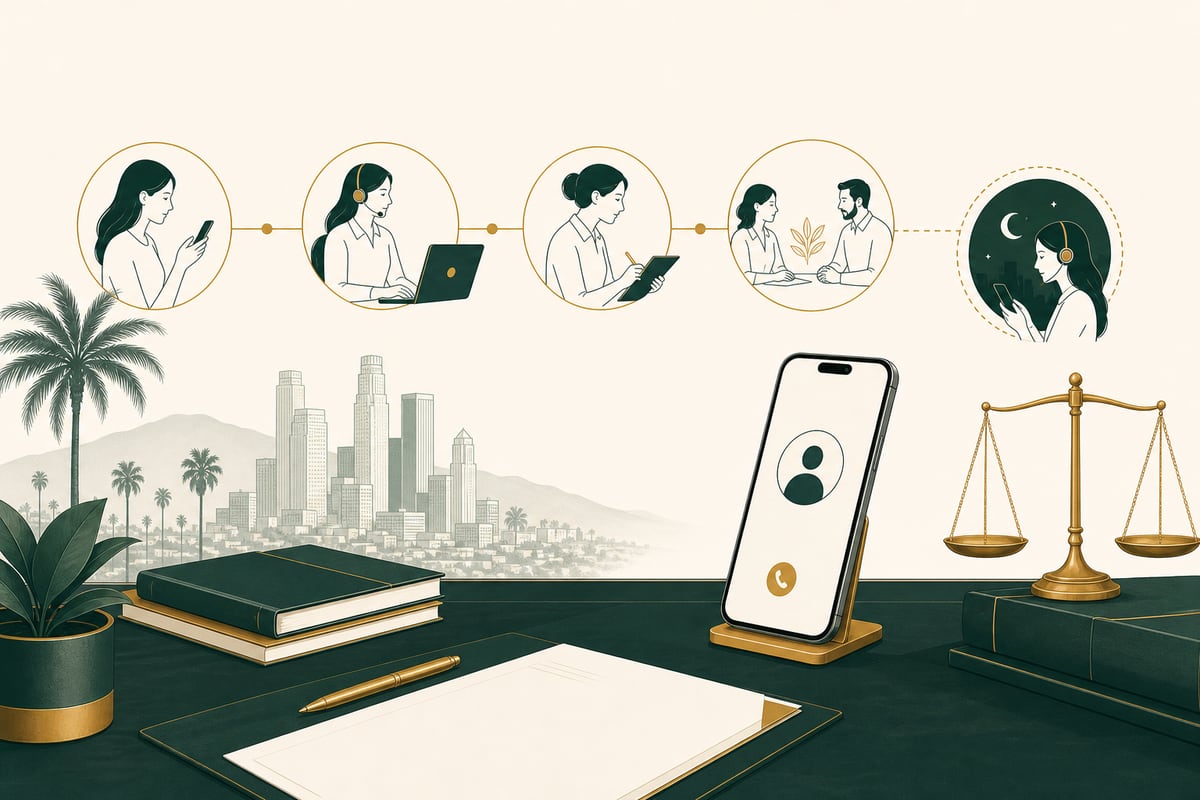
Most Los Angeles immigration and personal-injury firms can use AI after hours safely if it is limited to intake, clearly discloses recording, works in English and Spanish, and never gives legal advice. The goal is not to replace your front desk. It is to make sure a caller who reaches out at 8:30 PM is heard, documented, and routed appropriately instead of sent to voicemail.
Why this matters for LA immigration and PI firms
Immigration and personal-injury calls often come with urgency, stress, and language needs. A parent may call after putting children to bed. An injured driver may finally have a quiet moment after a hospital visit. A family member may feel comfortable explaining the situation only in Spanish.
If that caller reaches a cold voicemail box, three things often happen:
- they hang up
- they call another firm
- they share incomplete information because they are rushed or unsure what to say
After-hours phone coverage is not a luxury for these practice areas. It is often the difference between a documented lead and a lost one.
At the same time, law firms are right to be cautious. Nobody wants a system that sounds robotic, makes promises, misstates urgency, or creates compliance problems. That is why the safest use case is narrow: intake only.
The safest role for AI on a law firm phone line
For law offices, AI works best when it acts like a structured receptionist, not a legal assistant.
A safe after-hours system should do a few things well:
- answer promptly
- greet callers professionally in English and Spanish
- disclose that the call may be recorded, consistent with California two-party-consent rules
- collect contact details and basic intake facts
- identify whether the matter sounds urgent based on your firm's rules
- send the information to your team for follow-up
A safe system should not:
- give legal advice
- evaluate the strength of a case
- estimate settlement value
- tell an immigration caller what form to file or what deadline applies
- tell an injury caller whether they "have a case"
- create an attorney-client relationship on the call
That line matters. It protects the caller and it protects your firm.
Why trust is the real make-or-break issue
Most firms do not reject after-hours AI because of technology. They reject it because they worry it will feel impersonal.
That concern is valid. Legal callers are often anxious. Some are in pain. Some are worried about status, family, work authorization, insurance, police reports, or medical bills. If the first interaction sounds generic or pushy, trust drops immediately.
A better approach is to design the experience around clarity and restraint.
That means the caller should quickly understand:
- who they reached
- that this is an intake line
- that they can continue in English or Spanish
- that the system is collecting information for the firm to review
- that no legal advice is being given on the call
The tone should be calm and practical, not overly cheerful and not salesy. For legal intake, professionalism matters more than novelty.
What bilingual callers actually need after hours
For LA firms, bilingual support is not a feature to add later. It is part of basic accessibility.
But bilingual support should mean more than translating a greeting. A usable after-hours intake experience in Spanish should let the caller complete the actual intake naturally, not force them back into English for key details.
That includes:
- names and callback numbers
- preferred language
- basic matter type
- date and location of an incident, if relevant
- whether there are immediate deadlines or urgent concerns
- best time to call back
For immigration firms, that may also include a very high-level description of the issue, such as petition, interview, detention concern, or notice received, without trying to analyze it.
For PI firms, that may include accident type, whether medical treatment was received, and whether a police report exists, again without offering opinions.
The caller should feel understood, not filtered through a language barrier after business hours.
A practical trust-and-compliance checklist
If your firm is considering an after-hours AI line, this is the standard to use.
1. Keep it intake-only
The system should gather information and route it. It should never advise.
2. Disclose recording clearly
California is a two-party-consent state. If calls may be recorded, the caller should hear that clearly before proceeding.
3. Offer real bilingual flow
Callers should be able to complete the conversation in English or Spanish, not just choose a translated menu.
4. Use your firm's escalation rules
Not every urgent call is the same. A good setup follows your policy for what counts as urgent and how your team wants those calls flagged.
5. Avoid overpromising
The system should not promise representation, outcomes, or same-night attorney review unless that is truly your process.
6. Be honest about business hours
If the office is closed, the caller should know that. If someone will follow up the next business day, say that plainly.
7. Capture clean notes for your team
A good intake system should help your staff return calls with context, not create more cleanup work.
Where firms go wrong
The biggest mistake is trying to make an after-hours phone system do too much.
When firms ask AI to answer substantive legal questions, the risk goes up fast. The more it sounds like advice, the less appropriate it is for intake.
Other common mistakes include:
- using a voice that sounds casual or gimmicky
- failing to disclose recording
- treating Spanish as an afterthought
- collecting too little information to support follow-up
- collecting too much information in a confusing, exhausting call
- pretending the AI is a lawyer or case evaluator
A better system is smaller in scope and stronger in execution.
What a good after-hours experience sounds like
A trustworthy after-hours legal intake line is usually simple.
It might sound like this in practice:
- greeting with the firm name
- disclosure that the call may be recorded
- invitation to continue in English or Spanish
- brief explanation that this is an intake line and no legal advice will be provided
- collection of contact information and basic matter details
- note of urgency based on your rules
- clear statement about when the firm will follow up
That is enough to move the conversation forward without creating false expectations.
Why after-hours is the best place to start
For many firms, after-hours coverage is the lowest-friction way to improve phone intake.
It does not require replacing a strong daytime receptionist. It does not force an all-day workflow change. It focuses on the time window where missed calls are most likely to become missed opportunities.
This is especially useful for:
- immigration firms with evening Spanish-language demand
- PI firms receiving calls after accidents, ER visits, or long work shifts
- small offices that cannot staff live bilingual phones late at night
- firms that want documented intake instead of voicemail fragments
Used this way, AI is not replacing human judgment. It is preserving the first contact so your team can respond well.
The honest limit
An after-hours AI receptionist is not the right tool for every part of legal operations.
It cannot replace an attorney. It cannot build rapport the same way a skilled intake specialist can in every situation. It cannot make nuanced legal determinations, and it should not try.
But it can do something very valuable: answer the phone, communicate respectfully in English and Spanish, disclose recording, collect the right information, and help your office avoid losing callers who reached out when no one else was available.
For LA immigration and PI firms, that is often the most practical place to start.
See how TelAI handles bilingual after-hours intake
TelAI is built for bilingual after-hours intake for Los Angeles law firms and professional offices. It is intake-only, does not give legal advice, and supports clear recording disclosure for California callers.
If you want to hear the live experience, call (213) 752-9794. If you are ready to set up your line, visit /order.
Frequently asked questions
Can an AI receptionist answer legal questions after hours?
No. A safer setup is intake-only. It should collect information and route the call, not give legal advice.
Does the caller need to be told the call is recorded?
Yes, if calls may be recorded. California is a two-party-consent state, so recording disclosure should be clear.
Is this only useful for large law firms?
No. Small and mid-sized firms often benefit most because they cannot always staff bilingual after-hours coverage.
Can Spanish-speaking callers complete the full intake in Spanish?
They should be able to. True bilingual handling means more than a translated greeting.
How do I hear what this sounds like before setting it up?
Call the TelAI live demo at (213) 752-9794 or visit /order for setup details.