Notes from the line
The TelAI blog

Bilingual · September 4, 2026 · 6 min read
An Arabic-Speaking Receptionist for Your Office: What Modern Standard Arabic Support Means, and What It Does Not
An AI receptionist can greet and intake callers in Modern Standard Arabic and English on the same call, then deliver the brief to your office in English. It is not a native speaker of any one dialect, and an office that serves Arabic-speaking clients should know exactly where that line falls.
Read the post →

Industries · September 4, 2026 · 6 min read
The 2 AM Water Heater Call: How HVAC and Plumbing Companies Should Triage Emergencies With an AI Receptionist
For a trade business, the after-hours call is either a $1,200 emergency job or a nuisance that wakes your tech for nothing. An AI receptionist should sort the two using rules you write, wake a human only for the real ones, and hand the call over when it does.
Read the post →

Industries · September 4, 2026 · 6 min read
AI Receptionist for Dental Offices: What It Should Handle, and What Stays With Your Front Desk
A dental office's AI receptionist should take new-patient calls, appointment requests, insurance questions, and after-hours pain calls, and hand everything clinical, financial, and scheduling-final back to your front desk. Here is where the line goes.
Read the post →
Guides · September 4, 2026 · 6 min read
How to Test an AI Receptionist in 10 Calls Before You Trust It With Your Line
Before an AI receptionist touches a real customer, put it through ten specific calls: a plain question, a rushed caller, a language switch, a request for advice it must refuse, and a fake emergency. Twenty minutes tells you more than any sales page.
Read the post →
Guides · September 4, 2026 · 7 min read
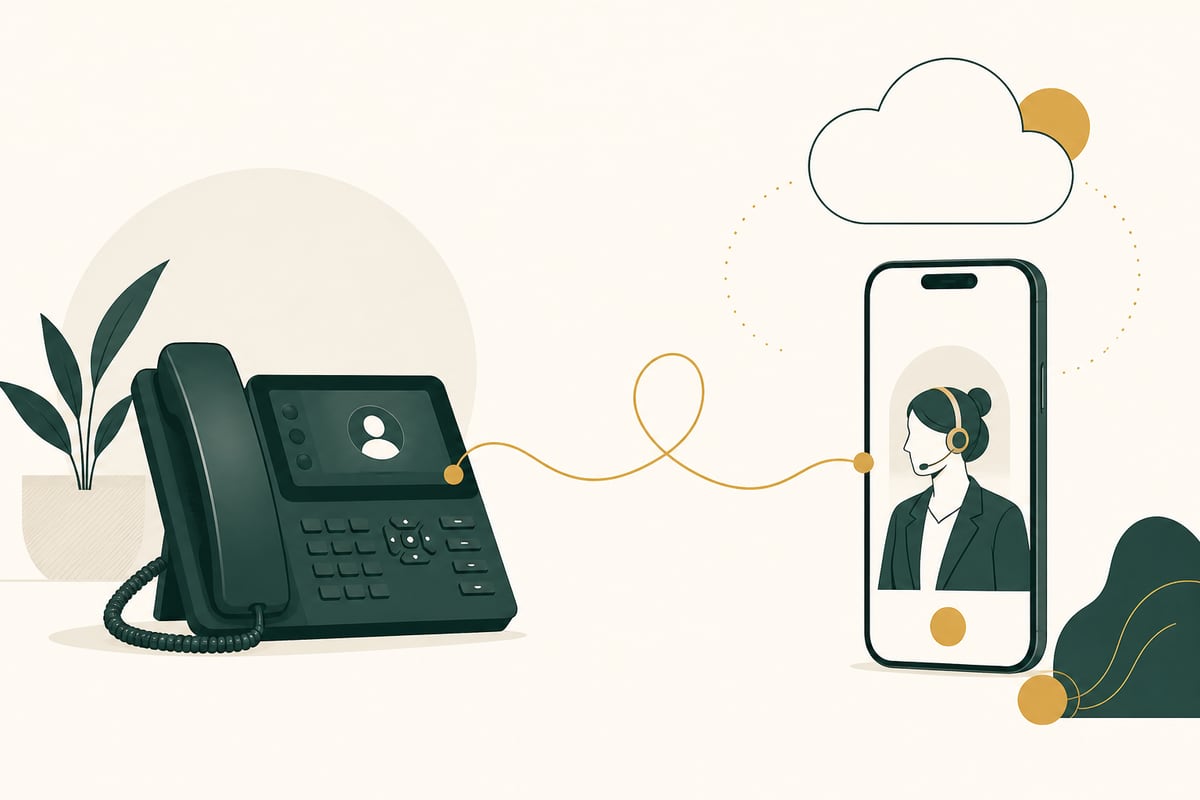
How to Forward Your Business Line to an AI Receptionist Without Changing Your Number
You keep your number and your front desk. Conditional call forwarding sends only the calls you choose — after-hours, no-answer, busy — to the AI receptionist, and takes about ten minutes to set up.
Read the post →
For law firms · June 29, 2026 · 8 min read
Should Your Immigration or PI Firm Use AI for Weekend Calls? A Practical Policy for Los Angeles Offices
Yes—if you keep it narrow. For LA immigration and personal-injury firms, a bilingual AI line can handle weekend intake safely when it collects basic facts, discloses recording, avoids advice, and hands off clearly to staff on the next business day.
Read the post →
For law firms · June 29, 2026 · 8 min read
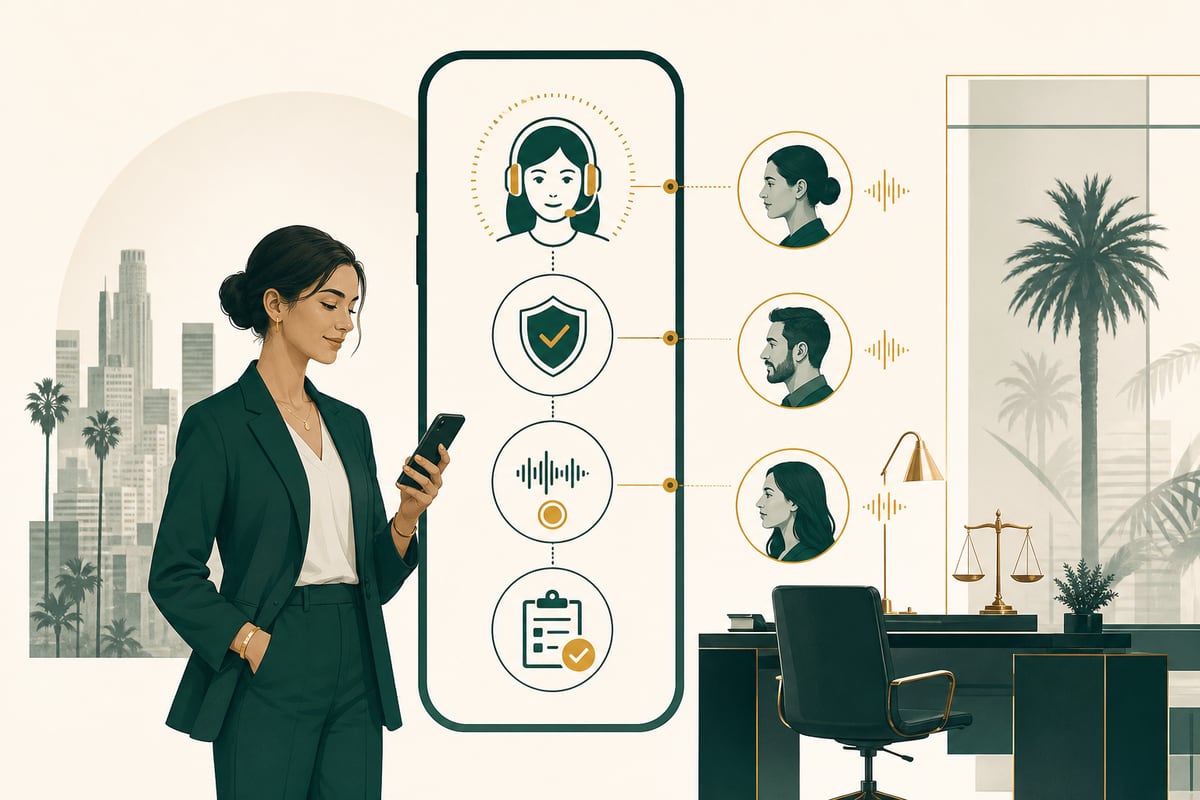
The First 30 Seconds Matter: A Safer Bilingual After-Hours Greeting for LA Immigration and PI Firms
For Los Angeles immigration and personal-injury firms, the first half-minute of an after-hours call often decides whether a caller stays, shares details, or hangs up. Here is how to design a bilingual greeting that builds trust, sets safe boundaries, and captures intake without giving legal advice.
Read the post →
Compliance · June 28, 2026 · 8 min read
A Simple After-Hours Voicemail Policy for LA Immigration and PI Firms That Want More Intakes, Not More Risk
Many LA immigration and personal-injury firms do not need a fully automated phone workflow overnight. They need a safer after-hours policy that beats voicemail, respects caller trust, supports Spanish-speaking clients, and stays within clear intake boundaries.
Read the post →
For law firms · June 28, 2026 · 8 min read
What LA Law Firms Should Say on Their After-Hours Line to Build Trust Fast
A strong after-hours phone experience is not just about answering the call. For Los Angeles immigration and personal-injury firms, the right wording can help bilingual callers feel safe, understood, and ready to complete intake without crossing compliance lines.
Read the post →

For law firms · June 27, 2026 · 7 min read
How to Make an After-Hours Immigration or PI Intake Call Feel Safe in English and Spanish
For Los Angeles immigration and personal-injury firms, the after-hours problem is not just missed calls. It is whether a caller feels safe enough to continue. Here is how a bilingual intake-only AI line can build trust, stay within compliance boundaries, and capture the right information without sounding cold or overreaching.
Read the post →
For law firms · June 27, 2026 · 8 min read
How to Set Boundaries for a Bilingual After-Hours Intake Line Without Losing Good Cases
A bilingual after-hours AI line can help LA immigration and personal-injury firms capture more calls, but only if the boundaries are clear. Here’s how to decide what the line should do, what it should never do, and how to protect trust while improving intake.
Read the post →
For law firms · June 26, 2026 · 8 min read
Should Your Law Firm Let an AI Receptionist Book Consultations After Hours? A Safer Policy for LA Immigration and PI Offices
Yes—if the AI is limited to intake and scheduling rules you control. For Los Angeles immigration and personal-injury firms, after-hours booking can reduce missed opportunities without crossing into legal advice, as long as the system confirms availability, discloses recording, and hands off attorney judgment to your team.
Read the post →
For law firms · June 26, 2026 · 8 min read
Designing a Trustworthy After-Hours Phone Experience for Immigration and PI Callers in Los Angeles
A good after-hours AI phone line for LA immigration and personal-injury firms should feel clear, calm, bilingual, and limited to intake. Here’s how to design a first-call experience that builds trust without crossing compliance lines.
Read the post →
Compliance · June 25, 2026 · 8 min read
A Safer First Contact: Intake Boundaries Every LA Immigration and PI Firm Should Set for an After-Hours AI Line
For Los Angeles immigration and personal-injury firms, an after-hours AI line works best when its limits are clear: intake only, bilingual, disclosure-first, and designed to route—not advise.
Read the post →

For law firms · June 25, 2026 · 7 min read
How LA Immigration and PI Firms Can Capture Better After-Hours Intakes Without Asking Too Much
A good after-hours legal intake line should collect the basics, build trust in English and Spanish, and stop well short of legal advice. Here is a practical framework for LA immigration and personal-injury firms.
Read the post →
Compliance · June 24, 2026 · 7 min read
The Safe Handoff: How a Bilingual After-Hours AI Line Can Capture Intake Without Replacing Attorney Judgment
A bilingual after-hours AI line can help LA immigration and personal-injury firms capture more intake while keeping the actual legal judgment with your staff and attorneys. The key is a narrow role: answer, disclose, collect facts, flag urgency, and hand off cleanly the next business day.
Read the post →
Compliance · June 24, 2026 · 8 min read
Can a Bilingual AI Receptionist Help Your Law Firm Without Practicing Law?
Yes—if it stays in its lane. For Los Angeles immigration and personal-injury firms, a bilingual AI phone receptionist can handle after-hours intake, language access, and urgent routing without giving legal advice, quoting outcomes, or pretending to be a lawyer.
Read the post →
Bilingual · June 23, 2026 · 8 min read
Do You Need a Separate Spanish After-Hours Line? A Better Option for LA Law Firms
Most LA immigration and personal-injury firms do not need a separate Spanish after-hours number. A single bilingual intake line is usually simpler, easier to promote, and better for caller trust—if it is set up with clear disclosures, careful routing, and no legal advice.
Read the post →
For law firms · June 23, 2026 · 8 min read
How LA Immigration and PI Firms Can Use AI After Hours Without Sounding Cold or Risky
A practical guide for Los Angeles immigration and personal-injury firms that want bilingual after-hours intake without losing trust, crossing compliance lines, or replacing staff.
Read the post →

Accessibility · June 22, 2026 · 7 min read
Why a Phone-Only AI Assistant Is a Game-Changer for Seniors, Disabled Users, and Drivers
Touchscreens, apps, and passwords create barriers for millions of people. A phone-only AI assistant like Eva removes all of that — letting seniors, people with disabilities, and drivers get things done through a simple phone call.
Read the post →
Bilingual · June 22, 2026 · 8 min read
What Spanish-Speaking Callers Notice First on an After-Hours Law Firm Line
For LA immigration and personal-injury firms, after-hours trust is often won or lost in the first minute. Here’s what Spanish-speaking callers notice first, and how to make your intake line feel clear, respectful, and compliant.
Read the post →
For law firms · June 22, 2026 · 8 min read
How to Screen Urgent Calls After Hours Without Giving Legal Advice
A practical after-hours intake framework for LA immigration and personal injury firms: identify urgency, collect the right facts, disclose recording, and route emergencies without crossing into legal advice.
Read the post →
For law firms · June 21, 2026 · 8 min read
How to Add a Bilingual After-Hours Intake Line Without Changing Your Daytime Front Desk
For LA immigration and personal-injury firms, the safest way to test AI is often to leave your daytime receptionist alone and add a bilingual after-hours intake line that only captures and routes new-client calls.
Read the post →

Bilingual · June 21, 2026 · 8 min read
What Your After-Hours Phone Script Should Say in English and Spanish
A clear, bilingual after-hours script can help LA immigration and personal-injury firms capture more qualified calls while setting the right expectations on urgency, privacy, and next steps.
Read the post →

For law firms · June 20, 2026 · 8 min read
When Should a Law Firm Use AI Only After Hours? A Practical Policy for LA Immigration and PI Offices
For many Los Angeles immigration and personal-injury firms, the safest first use of an AI receptionist is after hours only: capture bilingual intake, set expectations, and avoid missed calls without replacing daytime staff.
Read the post →
For law firms · June 20, 2026 · 8 min read
The Bilingual After-Hours Gap: A Safer Intake Playbook for LA Immigration and PI Firms
If your Los Angeles firm handles immigration or personal-injury matters, the highest-risk phone gap is often after hours—especially for Spanish-speaking callers. Here is a practical, compliance-aware playbook for using a bilingual AI receptionist for intake only, without overpromising or crossing into legal advice.
Read the post →
Compliance · June 19, 2026 · 8 min read
Data, Transcripts, and Retention: What Happens to Your Clients' Calls
An AI receptionist should collect only what your office needs for intake, disclose recording when required, and give you clear rules for where call transcripts, summaries, and recordings are stored and how long they are kept. For law firms and professional offices, the safest approach is a bilingual intake-only system with defined retention settings, limited access, and no legal or medical advice.
Read the post →
Guides · June 19, 2026 · 8 min read
Will an AI Receptionist Hurt Client Trust? The Honest Answer
Usually, no—an AI receptionist does not hurt client trust when it is clearly introduced, handles intake well, and gives people a fast path to a real person. Trust drops when callers feel misled, rushed, or unable to reach staff for sensitive or urgent issues.
Read the post →
Case studies · June 18, 2026 · 9 min read
How We Set Up a Bilingual AI Line in 48 Hours (Behind the Scenes)
Yes—you can set up an intake-only bilingual AI phone receptionist quickly if the workflow is narrow, the call script is clear, and the handoff rules are defined up front. Here’s what a realistic 48-hour setup looks like behind the scenes for a Los Angeles office that needs English/Spanish call coverage without replacing staff.
Read the post →

For law firms · June 18, 2026 · 8 min read
Personal Injury Firms: One Missed Call Can Cost a Case
Yes—after-hours intake can directly affect whether a personal injury firm signs a case, preserves evidence, and responds before a caller contacts another lawyer. A bilingual, intake-only phone agent helps capture and qualify leads 24/7 so urgent calls do not turn into missed opportunities.
Read the post →
Guides · June 17, 2026 · 9 min read
7 Questions a Good Legal-Intake AI Must Ask (and 3 It Must Never Answer)
A good legal-intake AI should ask enough clear, compliant questions to capture contact details, case basics, timing, injuries or damages, and conflict-check information—then hand the matter to your firm. It should never answer legal questions, predict outcomes, or tell callers what their case is worth.
Read the post →
For law firms · June 17, 2026 · 8 min read
After-Hours Intake: The Lowest-Risk Way to Try an AI Receptionist
For most law firms, after-hours intake is the safest place to test an AI receptionist because it covers missed calls when your team is offline without changing how your daytime front desk works. You can capture more leads, screen emergencies, and offer bilingual English/Spanish intake while keeping humans in control during business hours.
Read the post →
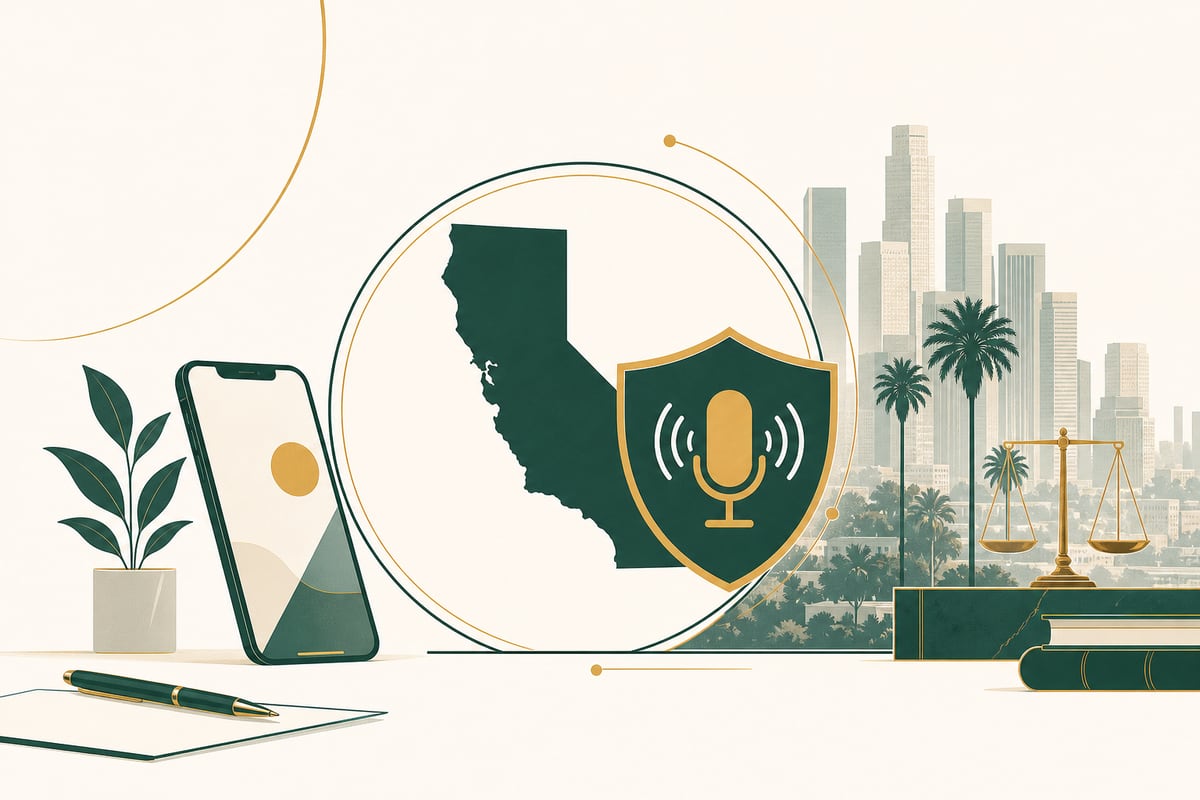
Compliance · June 16, 2026 · 9 min read
Is It Legal to Record Calls in California? What Offices Must Disclose
Yes—California is generally a two-party consent state for confidential phone calls, which means offices usually must disclose recording and get consent before recording business calls. The safest practice is a clear notice at the start of the call, with a way for callers to decline or use another contact method.
Read the post →

Bilingual · June 15, 2026 · 8 min read
What "Bilingual" Should Actually Mean for Your Phone Line
A true bilingual phone line for a law firm means more than greeting callers in Spanish. It should handle intake fluently in English and Spanish, disclose recording, avoid legal advice, and reliably capture the facts your staff needs to follow up.
Read the post →
Guides · June 14, 2026 · 8 min read
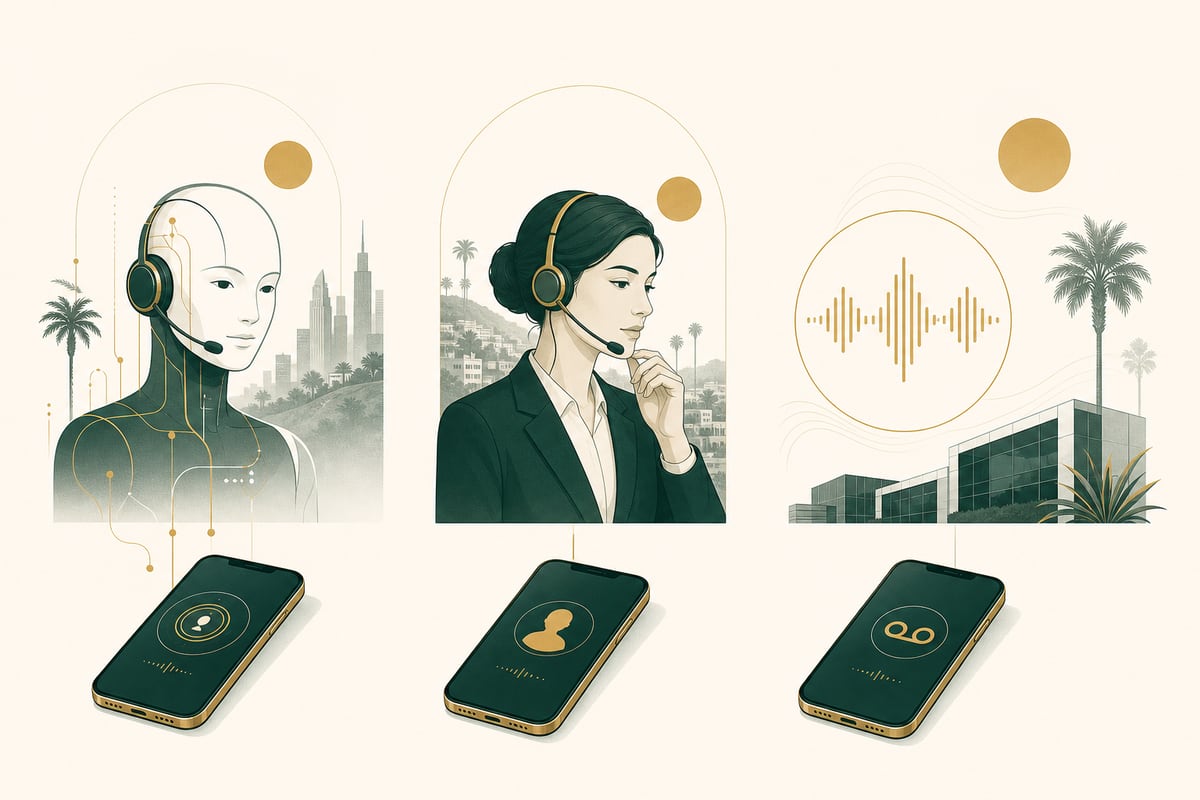
AI Receptionist vs. Human Answering Service vs. Voicemail: An Honest Comparison
An AI receptionist, a human answering service, and voicemail can all answer missed calls, but they serve very different roles. For most Los Angeles law firms and professional offices, the best choice depends on whether you need 24/7 bilingual intake, lower cost per call, empathy for edge cases, or the absolute simplest fallback.
Read the post →
For law firms · June 14, 2026 · 8 min read
Why LA Immigration Firms Lose Spanish-Speaking Clients After Hours
Los Angeles immigration firms often lose Spanish-speaking callers after hours because the call experience breaks at the exact moment trust and clarity matter most. A bilingual answering service built for immigration intake can capture urgent calls, explain next steps in Spanish or English, and help your firm follow up fast without giving legal advice.
Read the post →
Guides · June 14, 2026 · 6 min read
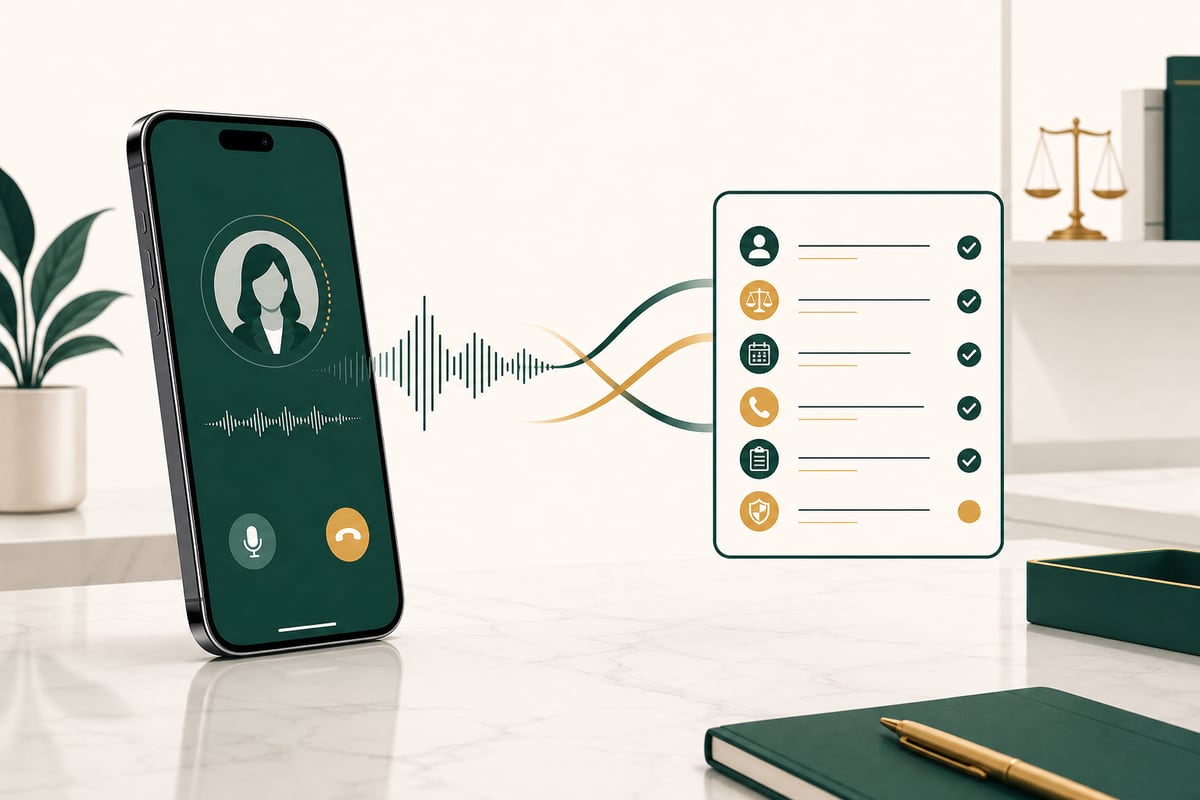
How an AI Receptionist Works for a Law Office (Plain Guide)
A plain-English guide to how an AI receptionist answers, understands, and routes a law-office call — what it does, what it must never do, and how setup works.
Read the post →
Case studies · June 10, 2026 · 5 min read
The 9:47 PM Call: How an AI Receptionist Handles a Bilingual Client Intake
A real, unedited call to our demo line — a caller asks about a car accident in English, switches to Spanish mid-call, and the structured intake brief is emailed before she hangs up.
Read the post →