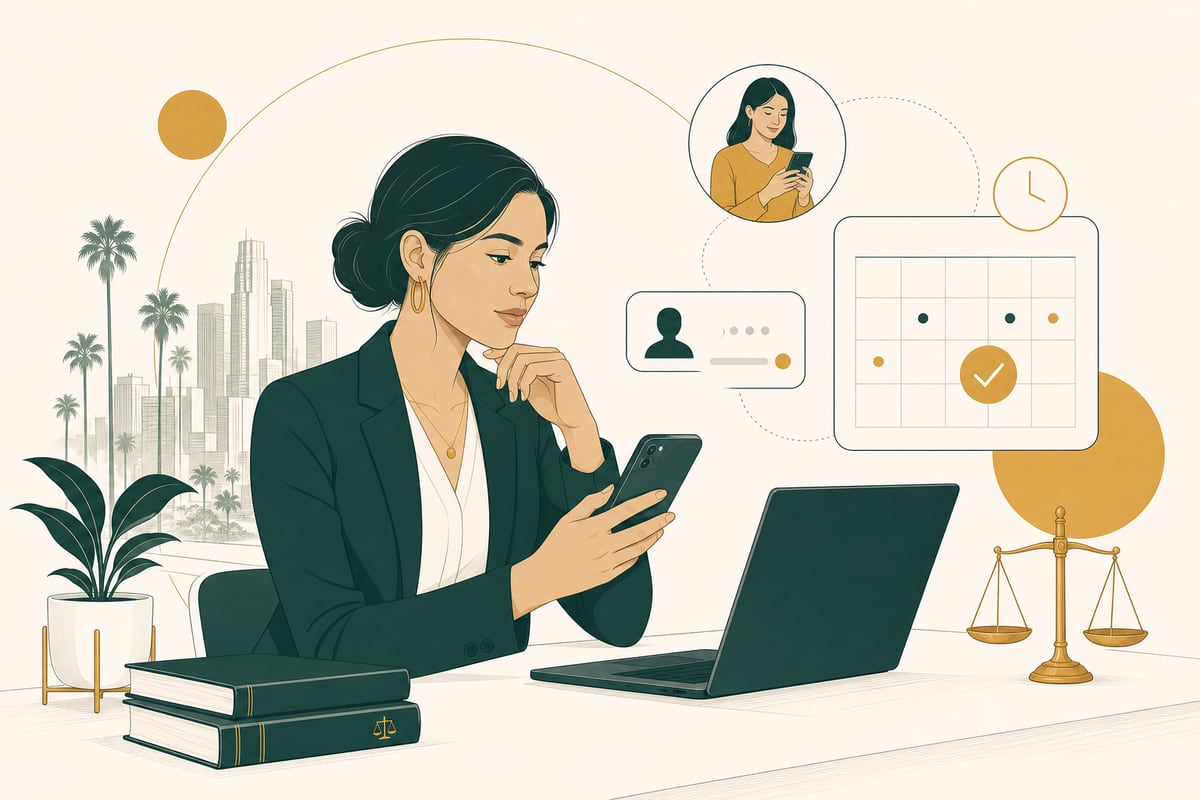
Yes—an AI receptionist can book after-hours consultations for a law firm, but only if it stays intake-only, follows your scheduling rules, and never gives legal advice. For Los Angeles immigration and personal-injury firms, the safest setup is a bilingual line that collects caller details, discloses recording, offers available consult times, and clearly hands legal decisions to your staff.
Why this question matters for LA immigration and PI firms
After-hours calls are often high-intent calls. In immigration, a caller may finally have privacy late at night to ask for help in Spanish or English. In personal injury, a caller may be dealing with stress, pain, transportation problems, or family members calling on their behalf after a crash.
If nobody answers, the caller usually gets voicemail, hangs up, or calls the next firm. But many law offices are also understandably cautious: they do not want an automated system making promises, misquoting fees, discussing case value, or creating confusion about whether the person has become a client.
That is why the real issue is not whether AI should "handle" the matter. It should not. The question is narrower and more practical: can an after-hours bilingual AI line capture basic intake and place a consultation on the calendar under firm-approved rules?
In many offices, the answer is yes.
What an AI receptionist should be allowed to do
For law firms, a trustworthy after-hours AI receptionist should stay within a small lane:
- Answer calls in English and Spanish
- State that the call may be recorded and transcribed
- Identify itself clearly as an automated receptionist
- Collect basic contact and intake information
- Ask firm-approved screening questions
- Offer consultation times from rules or calendar availability you provide
- Confirm that a lawyer will review the matter
- Send the details to your team for follow-up
This is administrative support, not legal judgment.
For example, it is generally appropriate for the system to say:
- "I can help collect your information and schedule a consultation."
- "An attorney or staff member will review your matter."
- "I can offer the next available consultation times."
That is very different from saying:
- "You have a strong case."
- "You should file immediately."
- "This will be easy to win."
- "You do not need to worry about your deadline."
Those statements cross the line into advice, prediction, or reassurance the system should never provide.
The safest booking policy is simple
The best after-hours scheduling policy is usually conservative.
A good policy for an LA immigration or PI office often looks like this:
- The AI collects intake first. Name, callback number, preferred language, basic case type, and a short summary.
- The AI gives the required disclosure. In California, calls should be disclosed if recorded.
- The AI offers only pre-approved appointment types. For example, consultation request slots, not "case strategy sessions" or anything that implies representation.
- The AI uses controlled availability. Only times your firm has authorized.
- The AI avoids promises. No fee quotes unless you explicitly script them, no case evaluation, no deadlines analysis.
- The AI confirms that booking is not legal representation. The consultation is a meeting request, not acceptance of the case.
- Your team reviews every intake. Staff can confirm, reschedule, or escalate the next morning.
This approach keeps the value of after-hours response while protecting trust and compliance.
Why bilingual booking matters more than many firms think
For Los Angeles immigration and PI firms, bilingual capability is not a feature to tack on later. It is core to whether after-hours scheduling works at all.
A Spanish-speaking caller who reaches a nighttime line and hears awkward, partial, or confusing Spanish may stop right there. Even if the system technically answers, the experience can feel unsafe. That is especially true when the caller is discussing an accident, an arrest-related family concern, a status issue, or a sensitive timeline.
A bilingual intake line should be able to:
- Greet callers naturally in English and Spanish
- Let the caller choose or switch languages easily
- Capture names, phone numbers, and case details accurately in both languages
- Ask the same intake questions consistently across both languages
- Confirm the consultation time in the caller's preferred language
This is one reason phone-first bilingual intake is useful after hours. The caller does not need to fill out a form, navigate a website, or wait until the office opens.
What should never be automated in legal intake
Even if booking is allowed, some tasks should remain firmly with your team.
Your AI receptionist should not:
- Decide whether the firm will accept the case
- Explain legal options or strategy
- Interpret filing deadlines or statute issues
- Advise on what evidence to gather for legal purposes
- Tell a PI caller how much the case may be worth
- Tell an immigration caller what forms to file or whether to appear somewhere
- Handle emergencies as if it were a lawyer or crisis line
For urgent situations, the system can follow your firm policy by collecting details and directing the caller to appropriate emergency resources when necessary. But it should never pretend to be legal counsel.
A practical setup for immigration firms
For immigration offices, after-hours callers often need reassurance that someone will follow up, not instant legal analysis.
A safe workflow might include:
- Language selection in English or Spanish
- Recording disclosure
- Intake questions about contact info, case category, and timeline
- A short notice that the system cannot provide legal advice
- Offer of the next available consultation times
- Confirmation text or email if your workflow supports it
- Next-morning review by staff
The line can gather useful context such as whether the caller is asking about family-based matters, removal concerns, work-related issues, or another category—without discussing legal options.
A practical setup for PI firms
For personal-injury offices, timing matters, but so do boundaries.
A safe workflow might include:
- Language selection
- California recording disclosure
- Basic facts: accident date, callback number, and a short description
- A check for immediate medical or emergency concerns based on your policy
- Offer of consultation slots or callback windows
- Clear statement that no legal advice is being given and attorney review is required
This can be especially helpful when a caller is reaching out from the scene aftermath, from home late at night, or through a family member who simply wants the firm to call back first thing in the morning.
The trust issue: callers should know what the system is
One mistake firms should avoid is trying to make automation sound human.
Trust usually improves when the system is direct:
- It says it is an automated receptionist
- It explains what it can do
- It explains what it cannot do
- It offers a clear next step
That is better than sounding vague or pretending to be a live staff member. For legal intake, clarity matters.
A straightforward after-hours script can still feel warm, respectful, and professional in both languages.
What to ask before turning on after-hours booking
Before your firm allows an AI line to schedule consultations, answer these questions:
- Which appointment types may be booked after hours?
- What exact intake questions are approved?
- What fee language, if any, is allowed?
- How should urgent or distressed callers be routed?
- What calendar times are safe to expose?
- What disclaimer should confirm that booking is not representation?
- Who reviews overnight intakes first thing in the morning?
- How will English and Spanish versions be checked for consistency?
If you cannot answer these clearly yet, the right first step may be intake-only capture without booking. But if you do have clear rules, after-hours scheduling can be a practical extension of your intake process.
Where TelAI fits
TelAI is designed for this narrow lane: bilingual, after-hours, intake-only phone coverage for law firms and professional offices. That means the system can answer in English and Spanish, disclose recording, collect structured intake, and follow your approved scheduling rules—without stepping into legal advice.
For many Los Angeles immigration and PI firms, that is the useful middle ground. You do not need to replace your daytime front desk. You do not need to let an automated system make legal judgments. You simply need a dependable way to answer the phone after hours, capture the opportunity, and tee up the next business-day handoff.
The bottom line
Letting an AI receptionist book after-hours consultations can be a smart move for LA immigration and personal-injury firms, but only when the system is tightly scoped. Keep it bilingual, intake-only, disclosure-based, and rule-driven.
If the AI collects information, offers approved time slots, and leaves legal judgment to your team, it can help your firm respond faster after hours without creating the wrong kind of risk.
Frequently asked questions
Can an AI receptionist book consultations without practicing law?
Yes, if it is limited to administrative intake and scheduling rules set by the firm. It should not evaluate the case or give legal advice.
Should callers be told the call is recorded?
Yes. In California, if calls are recorded, the disclosure should be made clearly.
Can the same after-hours line work in English and Spanish?
Yes. For many Los Angeles firms, one bilingual line is simpler and more consistent than separate language lines.
Should the AI confirm that the caller is now a client?
No. Booking a consultation should not imply representation. The system should make that clear.
How can I hear how this works live?
Call the live demo at (213) 752-9794 or visit /order to set up a bilingual after-hours intake line.