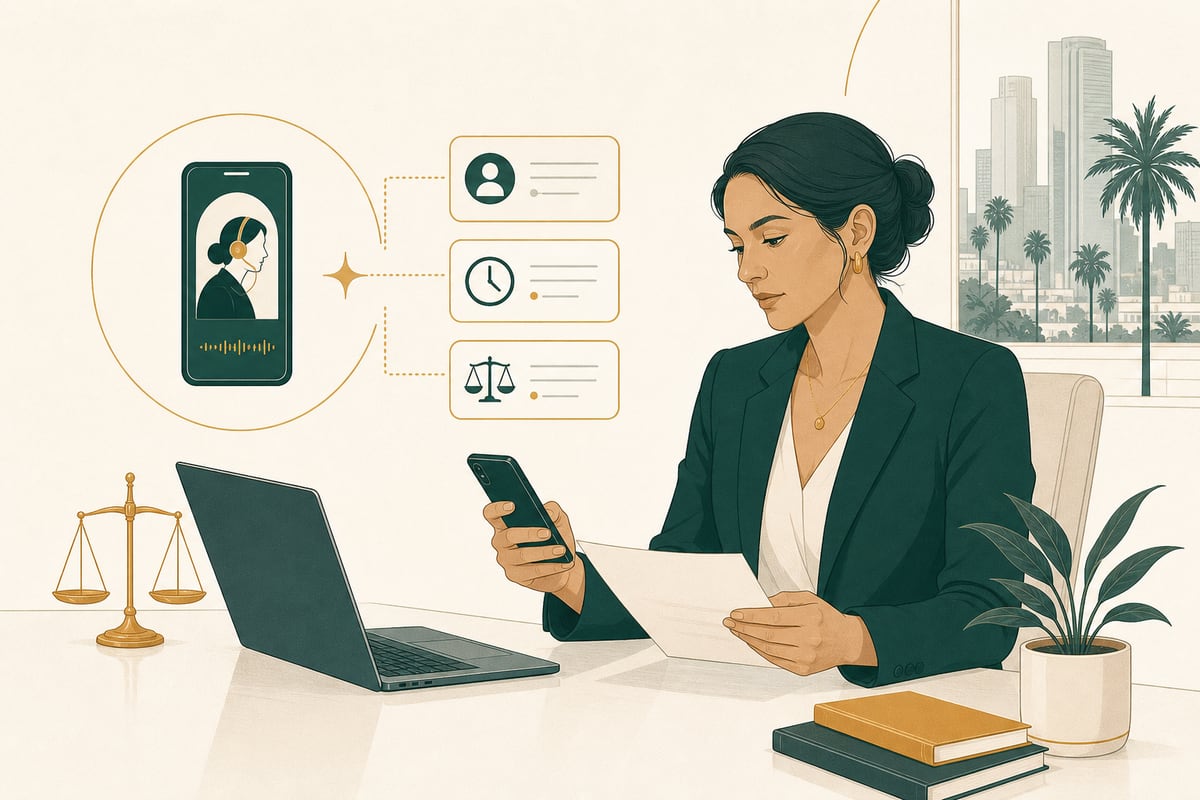
A bilingual after-hours AI line can support intake without replacing attorney judgment if it stays in a narrow lane: answer the phone, disclose recording, gather basic facts, note urgency, and hand the matter to your team. For Los Angeles immigration and personal-injury firms, the safest setup is not “AI handling cases,” but AI capturing intake so your staff can follow up quickly and make the real decisions.
Why this matters for LA immigration and PI firms
Immigration and personal-injury calls often come with stress, urgency, and language needs. Many of those calls happen after business hours, when the office is closed and voicemail is the only option. That creates two common risks:
- A potential client hangs up because no one answered in Spanish.
- A caller shares urgent facts, but no one on your team sees them until too late.
A bilingual after-hours line helps close that gap, especially in Los Angeles where English-and-Spanish phone coverage is not a nice extra. It is often the difference between a caller continuing the intake process or moving on.
Still, trust matters more than novelty. In legal intake, callers do not want a machine pretending to be a lawyer, a case manager, or a human receptionist. They want clarity, respect, and a path to speak with the firm. That is why the handoff model is the right model.
What “safe handoff” means
A safe handoff means the AI does only intake support, not legal analysis. It can:
- greet the caller in English or Spanish
- explain that it is an automated intake line
- disclose that the call may be recorded, consistent with California two-party-consent requirements
- collect contact information
- collect high-level facts about the matter
- ask structured intake questions approved by the firm
- identify whether the caller describes something time-sensitive or urgent
- pass a clean summary and transcript to the firm for review
It should not:
- give legal advice
- predict outcomes
- tell a caller whether they “have a case”
- interpret deadlines as legal conclusions
- negotiate, persuade, or pressure
- pretend an attorney-client relationship has started
That division is what protects trust. It also keeps your internal process simpler. Your lawyers and intake staff remain the ones exercising judgment.
Why bilingual after-hours coverage is different from ordinary answering
A standard answering service may be available after hours, but legal intake for immigration and PI often needs more than message-taking.
For example, a caller may need to explain:
- where an arrest, accident, or injury happened
- whether medical treatment was received
- whether there is an upcoming court or agency date
- whether the caller already has a lawyer
- whether documents, insurance information, or police details exist
If the line cannot guide that conversation clearly in English and Spanish, the result is usually incomplete intake. Incomplete intake means your team starts the next day missing key context.
A well-designed bilingual intake-only AI line can ask the same approved questions every time, in both languages, without improvising legal answers. That consistency is useful for firms that want a dependable after-hours process without changing how their daytime staff works.
The compliance side: where firms should be careful
The compliance value of an after-hours AI line does not come from “using AI.” It comes from setting limits and disclosures correctly.
Here are the practical points that matter most.
1. Be explicit that it is an automated intake line
Do not create confusion about whether the caller is speaking with a person. A simple opening is better for trust than a highly human imitation.
2. Disclose recording clearly
California is a two-party-consent state, so if calls are recorded, the caller should hear that clearly. The disclosure should be part of the call flow, in English and Spanish.
3. Avoid legal advice entirely
This is the biggest line not to cross. The AI should not answer questions like:
- “Do I qualify?”
- “How much is my case worth?”
- “Should I talk to the insurance company?”
- “Will this affect my immigration status?”
Instead, it should acknowledge the question and explain that a member of the firm can review the matter.
4. Do not imply representation
The system should not tell callers they are a client, that the firm has accepted the matter, or that a deadline is covered. Intake is not engagement.
5. Route urgent situations with a firm-approved policy
An intake line can identify urgency, but it should follow your policy rather than improvise. For example, your office may want certain injury calls or detention-related immigration calls flagged for priority callback. The key is that the policy comes from the firm.
A better way to think about after-hours AI
The wrong question is: “Can AI run my intake?”
The better question is: “Can an intake-only AI help us answer every call, in English and Spanish, collect the right facts, and hand the matter to our team cleanly?”
For most LA immigration and PI firms, that is the real opportunity.
This framing also reduces internal resistance. Your front desk, legal assistants, and attorneys are not being replaced. The system covers the hours when your office would otherwise miss calls, send callers to voicemail, or collect too little information to act quickly the next morning.
What a good handoff looks like the next business day
A safe after-hours setup should leave your team with something usable, not just a raw recording.
That usually means:
- caller name and callback number
- preferred language
- matter type
- basic event timeline
- urgency flag based on your rules
- summary of the caller’s stated facts
- transcript or recording for review
That lets your staff pick up the conversation without making the caller repeat everything from scratch. For anxious callers, especially those navigating injury, immigration stress, or limited English confidence, that continuity matters.
Where this works best
This approach is especially practical for firms that:
- get a meaningful share of evening or weekend calls
- serve both English- and Spanish-speaking communities
- want after-hours coverage without expanding payroll immediately
- already have a daytime intake process they like
- want a cautious, intake-only use of AI
It is less about replacing your existing team and more about creating a reliable bridge from after-hours first contact to daytime legal review.
TelAI’s approach
TelAI is built for this narrow role: a done-for-you bilingual AI phone receptionist for Los Angeles law firms and professional offices. It is intake-only, not legal advice. The goal is to help your office answer after-hours calls in English and Spanish, disclose recording, collect structured intake information, and hand off the conversation to your team.
That narrow scope is intentional. In immigration and PI, trust is earned by being clear about what the system can do and what it cannot do.
If your firm wants to test after-hours coverage without changing your daytime front desk, a separate intake-focused line is often the cleanest place to start.
The practical takeaway
For LA immigration and personal-injury firms, the safest use of an AI phone receptionist is not to replace legal judgment. It is to make sure after-hours callers reach a bilingual intake line that answers promptly, gathers the right facts, and hands the matter to your staff for real review.
That is the handoff model: narrow, practical, and easier to trust.
To hear how it works, call the live demo at (213) 752-9794 or visit /order.
Frequently asked questions
Can the AI tell callers whether they have a case?
No. TelAI is intake-only and does not give legal advice or make case evaluations.
Can it speak both English and Spanish on the same line?
Yes. Bilingual support is core, so callers can proceed in English or Spanish without needing a separate line.
Does it disclose call recording?
Yes. California two-party-consent recording disclosure should be stated clearly as part of the call flow.
Will this replace my daytime receptionist or intake staff?
Not necessarily. Many firms use it only after hours so daytime staff keep handling calls as usual.
How can I hear it before deciding?
Call the live demo at (213) 752-9794 or go to /order to learn more.